
Queens Arrest Reports Are Distributed
No single Queens 72-hour, weekly, or name-and-photo blotter exists. The city's Department of Correction posts who is currently in custody. NYPD releases aggregate reports plus arrest-level open data. Its newsroom covers only selected matters. The Queens District Attorney picks cases with prosecutorial news value. None of that adds up to a complete arrest list. The Daily Inmates in Custody dataset tracks custody, not a chronological booking log. NYPD year-to-date arrest data holds incident details but no public roster of names and photos. Each source answers a narrower question.
Read Queens Arrest Sources Correctly
Start with official records. Then decide what you actually need: current custody, an incident-level arrest record, case progress, or an older agency file. Those are separate records, and each runs on its own clock.
- Use the DOC custody lookup for a known person who may now be held in a city jail.
- Review NYPD Open Data for arrest patterns by date, borough, precinct, and offense category, not for name or photo matching.
- Use the NYPD newsroom and Queens DA releases for selected public events, noting their publication dates and charges.
- Check the criminal court record for arraignment, later appearances, and disposition.
- Send a focused FOIL request to the agency that holds an older report or existing photograph.
For same-day custody, use Arrested Today. A multi-day search works differently, tracking where a Queens record goes once it stops being current.
Queens Arrest-Report Fields Compared
Queens has no universal arrest-log entry. Fields change with the source. So avoid merging unrelated columns into one imagined booking record.
| Source | Fields and limits |
|---|---|
| DOC custody result | Name, NYSID, Book & Case Number, charges, court, holding location, bail or bond, and release data when entered; no public photo field. |
| NYPD arrest data | Arrest key and date, borough, precinct, law and offense categories, jurisdiction and geographic variables; not a named photo list. |
| Agency release | Selected charge, agency account, named parties when published, and a release date; not complete coverage. |
| Court record | Case status, appearances and disposition within public-access limits; sealed and confidential matters may not appear. |
| FOIL response | The responsive existing agency record, with possible withholding or redaction under applicable law. |
A charge lists what police alleged at that stage. It can be amended or dismissed later. For the official outcome, the Certificate of Disposition is the strongest proof.
Queens Weekend Reports Can Lag
Weekends and holidays create no special Queens blotter. Arrest processing, arraignment, DOC admission, statistical publication, and newsroom selection all move on separate tracks. One person may leave police custody without entering DOC. Another may surface only after arraignment and transfer. Weekly precinct reports offer only counts and basic crime statistics for the borough. NYPD year-to-date arrest data refreshes on a broader schedule. Neither counts as a live list of everyone arrested over a weekend. Local reporting runs on events. Stories publish after an arrest, indictment, or court appearance rather than at booking.
Official Queens Data, Not a Blotter
The public NYC dataset shows the city-jail population at a point in time. It is not a new-bookings list. Its official landing page makes that distinction clear. Check the NYC Open Data custody source before reading its records.
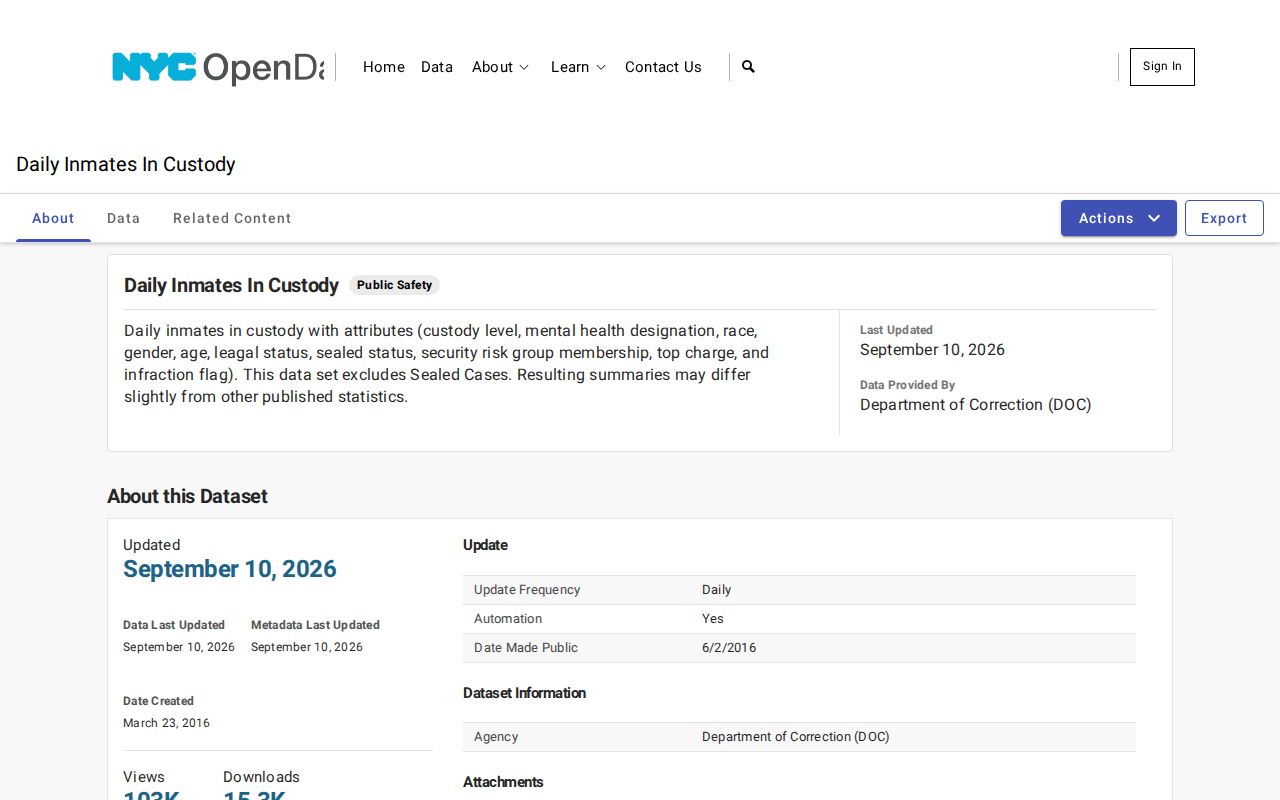
The page presents a daily custody dataset, not a Queens name-and-photo blotter.
Queens News Arrest Coverage
News fills narrative gaps, but coverage is selective. The Queens Daily Eagle crime section tracks arrests, courts, and criminal-justice policy. Its cadence follows reporting, not a booking schedule. Stories draw on court, scene, reporter, or agency images. The Queens Patch Crime and Safety section, QNS, Spectrum News NY1, and the Queens Chronicle also report selected incidents. A story about a wanted person does not confirm an arrest.
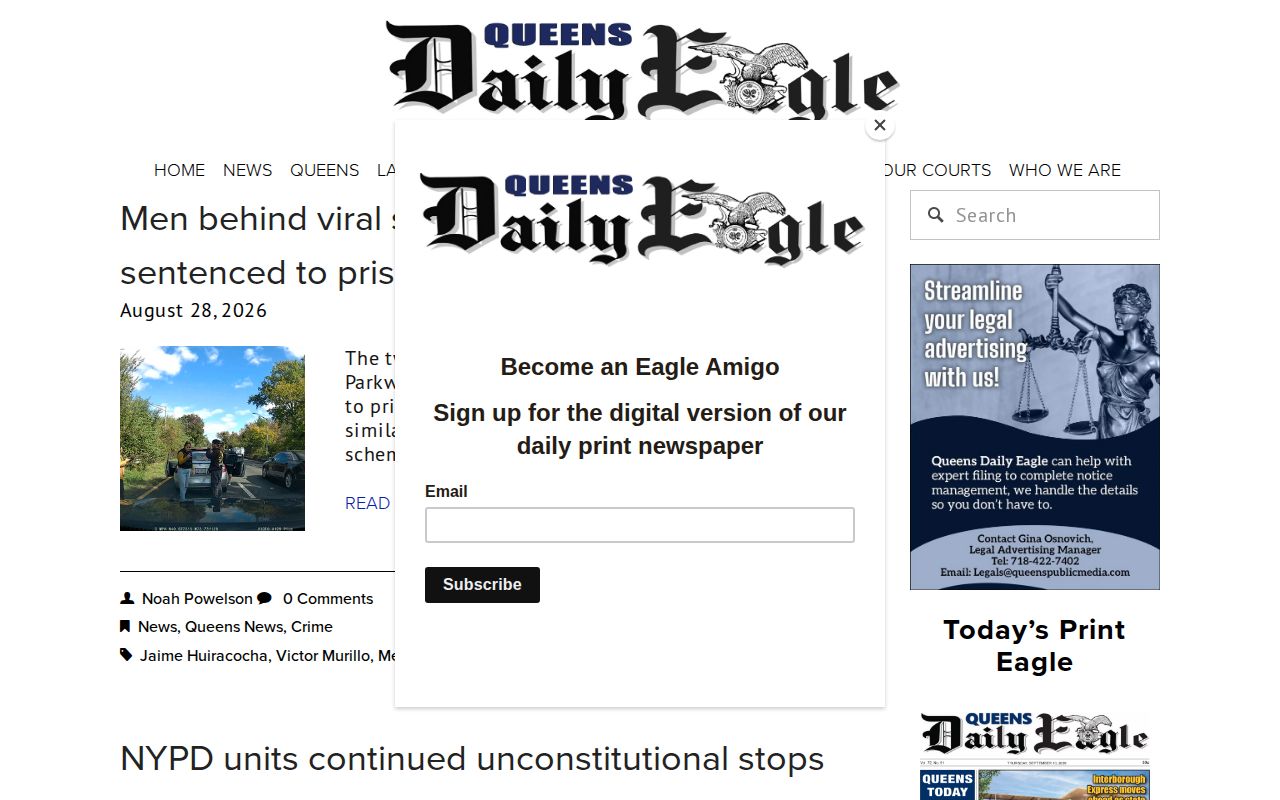
The page is valuable for context and later developments. It cannot show that all Queens arrests were reported.
Queens Third-Party Coverage Is Incomplete
The big arrest aggregators offer no dependable Queens feed. RecentlyBooked's New York index skips the borough. Arrests.org lists other counties but no Queens section. The tested Busted Newspaper Queens path is not live. Mugshots.zone sends visitors to a general page. Mugshots.com carries limited New York City material, not a distinct Queens archive. Those sites are unofficial and can be stale, incomplete, or misclassified. A statewide marketing page proves nothing about county coverage. No third-party result should outrank DOC, NYPD, the courts, or an agency response. A second local source is the Queens Chronicle. Its neighborhood reporting helps with date-based archive searches.
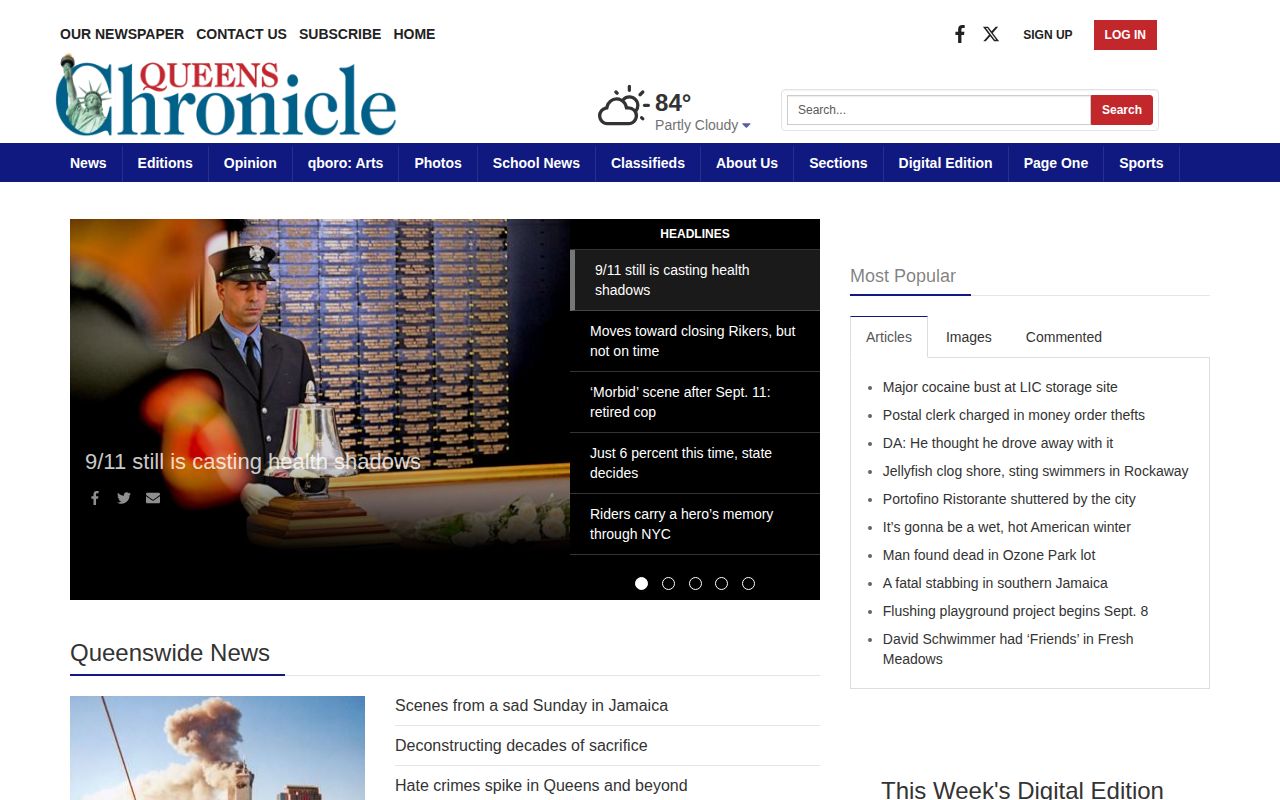
The weekly paper can supply neighborhood context. Its stories remain editorial selections, not official custody entries.
Archive Queens Arrest Reports
The DOC search reaches back to September 2005. That is a wide span of custody data. It is not a full arrest archive, though. Entries can vanish after a release or a status change even when the agency still holds the record. No fixed public roll-off period exists for these files.
Need a recent record? File through NYC OpenRecords. Name the agency, the person, the date, the precinct, and the record type. Older City material may sit with the agency itself, in City records storage, or at the Municipal Archives. Do not treat the state LGS-1 schedule as DOC's rule. That schedule excludes New York City offices and boroughs outright.
Online visibility is one thing. Legal retention is another. A record missing from the web is not destroyed. Sealed and youthful-offender records are lawfully unavailable, and news posts or social media cannot be used to rebuild them. For historical material, browse the Municipal Archives collections. For a current record, ask the agency directly.
Queens Arrest Charges Need Court Review
A DOC release date only tells you custody changed. Booking and arrest reports are paperwork from one moment in the process. The court file is where a case truly lives.
Check the reported case with New York City Criminal Court or Queens Supreme Court. A Certificate of Disposition states the official outcome. It beats any old blotter entry.