
Queens County Recent Arrest Channels
Most Queens arrests start with the NYPD. Queens North and Queens South split patrol work across 16 precincts. After an arrest, police might release the person, hand over a desk appearance ticket, or send the case to arraignment. Jail comes into play only when a judge commits someone to the New York City Department of Correction. That is why DOC custody searches answer who is locked up, yet they never capture every Queens County arrest. Each official channel holds one piece. DOC covers custody, NYPD data measures arrest activity, and the courts follow the case itself. A focused FOIL request can pursue a specific arrest record. News releases help, but they skip most arrests. For same-day results, see Arrested Today, or open Arrest Reports for the broader data picture.
| Need | Official source | Scope |
|---|---|---|
| Current city jail custody | NYC DOC lookup | People held after arraignment; not every arrest |
| Newly arrested today | No complete public feed | Police processing, release, or pending court |
| Arrest patterns | NYPD data | Statistics, not a named blotter |
| State prison | DOCCS lookup | People received into state custody |
| Release alerts | NYC VINE | People in NYC DOC custody |
Why Queens Custody Appears Late
Every Queens arrest creates two records on two clocks. NYPD writes the first one at the precinct. If the person stays locked up past arraignment, the Department of Correction opens a custody record. NYC311 warns that anyone arrested under 72 hours ago may still sit in police hands. VINE guidance says DOC housing and data entry can lag 48 hours or more. Once entered, most DOC fields refresh within 15 minutes. A few take up to four hours. These clocks measure different steps. A blank DOC result can reflect police processing, a desk appearance ticket, release at arraignment, a transfer, or plain entry delay, and it never rules out an arrest. Search with a firm identifier. Then call 311 or the right precinct, and request the exact record when you must have it.
Note: DOC location reflects custody when checked and does not prove where in Queens County the arrest took place.
Search the Queens Custody Roster
One roster does the real work. It is the NYC DOC Person in Custody Lookup, serving the city jail system that includes Rikers and other sites. No Queens sheriff jail sits behind it. The City Sheriff handles civil enforcement and does not run this list, and since housing shifts often, any result marks a current location rather than a fixed facility history.
| Search field | Use | Limit |
|---|---|---|
| NYSID | Strong fingerprint-based identifier | Not proof of conviction |
| Book & Case Number | Direct DOC search | Exists only after DOC entry |
| First and last name | Search without a number | Needs exact spelling and another identifier |
Lead with the strongest number you have. Otherwise, type the full name plus an added identifier. Compare possible matches by court, charge, number, and holding site. A result can show NYSID, Book & Case Number, charges, court date and place, bail or bond, mailing address, location, and release data, though the public screen has no photo field.
- Search by NYSID or Book & Case Number.
- Otherwise use the exact name and required added field.
- Read the status, court, charge, and location together.
- Account for police processing, release, transfer, sealing, and delay.
- Use FOIL for a verified historical copy.
The official roster screen shows this identifier-first search.
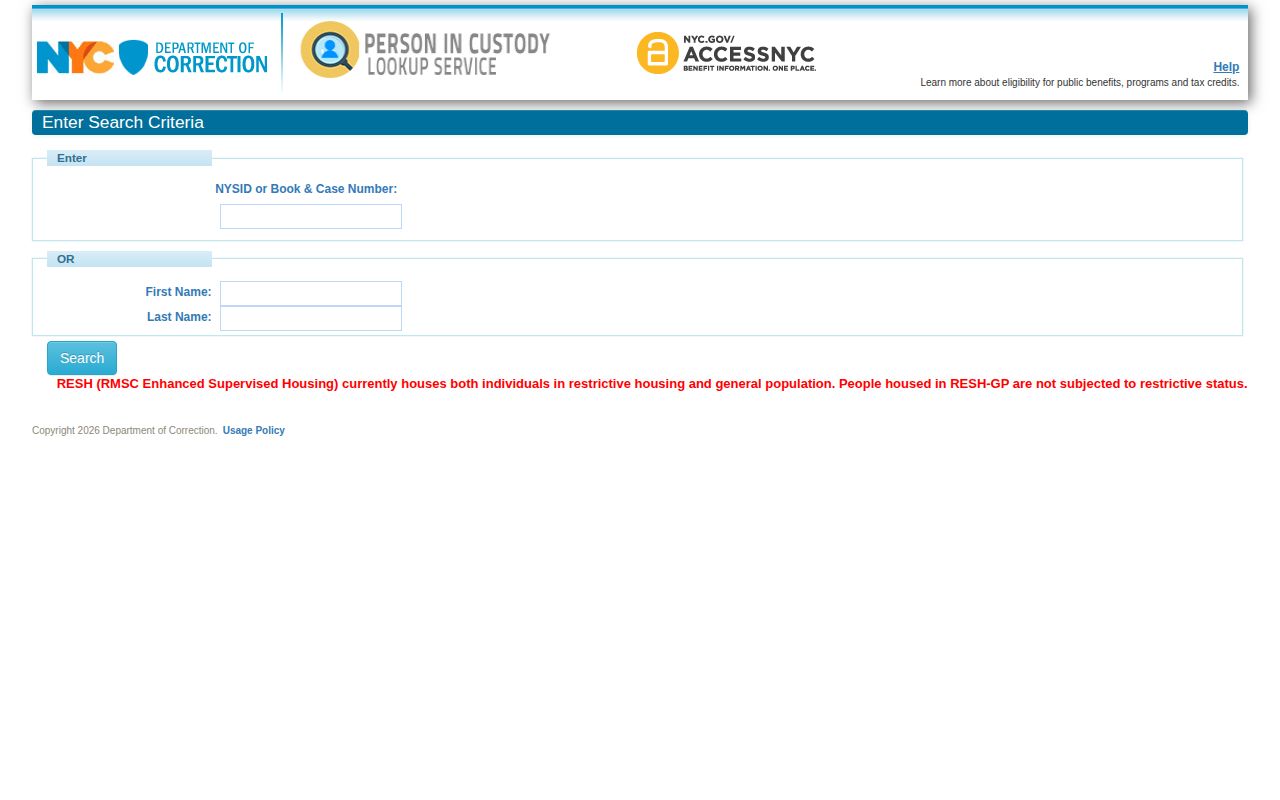
The form shows why a known number is stronger than a broad name query.
Where Queens Arrest Records Appear
No single source holds the whole arrest picture in Queens County. DOC answers who is in city custody right now. NYPD Open Data adds incident details like precinct and offense. It carries no photo roster, though. Courts handle outcomes, and VINE sends custody alerts. News or commercial indexes pick and choose, sometimes running stale images that are scene or editorial shots rather than booking photos.
| Channel | Photo? | Status |
|---|---|---|
| NYC DOC lookup | No public field observed | Official current custody |
| NYPD data/news | Selected images | Official, not complete |
| New York courts | No gallery | Official case record |
| DOCCS | No public field observed | Official state custody |
| Queens Daily Eagle | Story-dependent | Unofficial editorial coverage |
The Queens Daily Eagle crime section shows event-driven local coverage, not a booking list.
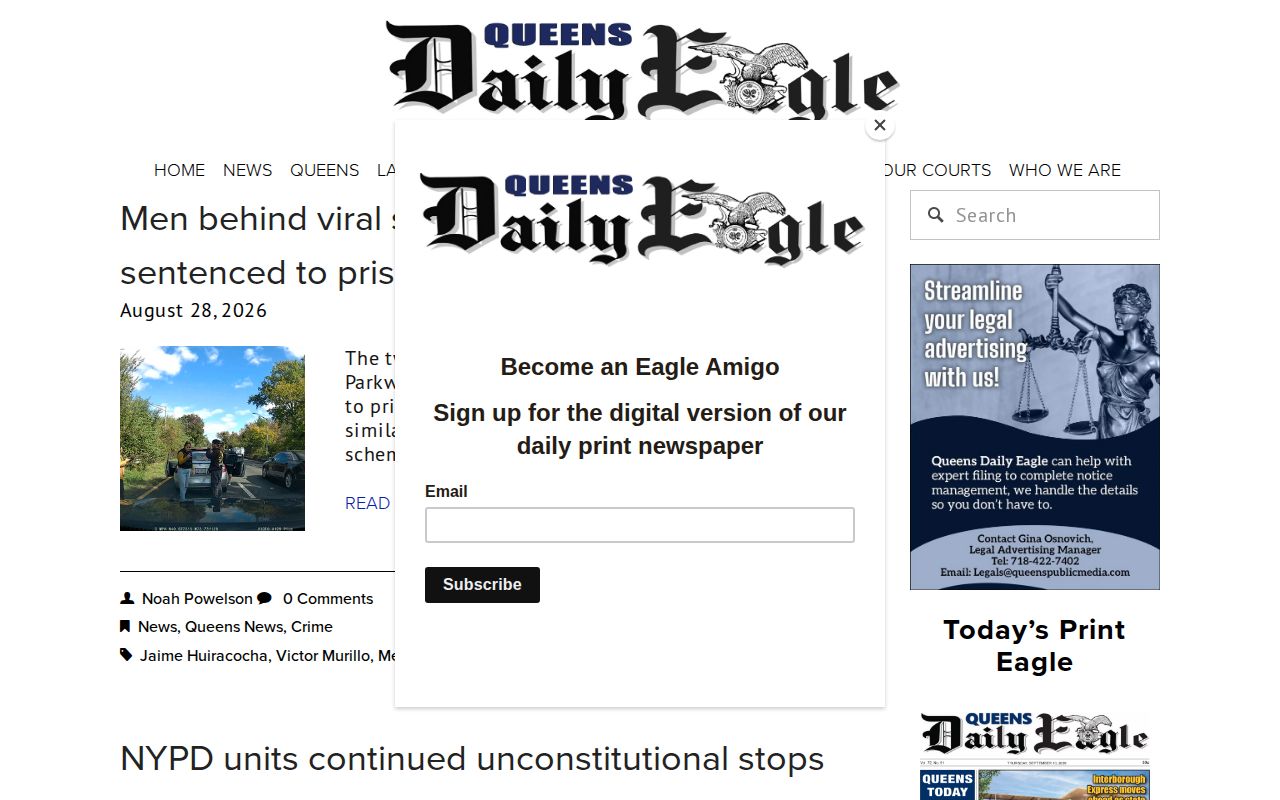
Stories can add court context, but claims still need agency and court checks.
Queens Arrests Use City Systems
Queens County is simply the Borough of Queens. Jamaica is a neighborhood, not a city with its own jail. Flushing, Astoria, and Long Island City are locality names too. Each sits inside the same NYPD precinct structure. So run a neighborhood search through its precinct, then chase the person through DOC and court records. The citywide page is New York City Recent Arrests. No sheriff or DOC app posts Queens booking photos. NYC311, VINE, and Crime Stoppers each offer an app, but none serves as a full arrest roster.
Queens County Booking Record Fields
An NYPD arrest record and a DOC custody result are different animals. Police data may list the arrest date and a key number. It can also show the precinct, borough, offense, jurisdiction, and location. A DOC entry only begins once someone enters city jail. One Queens arrest can spawn police, custody, court, VINE, and later state-prison records. Each one carries its own date and identifier.
| Field | Meaning |
|---|---|
| Name and IDs | Person tied to the record, NYSID, or Book & Case Number |
| Charge | Charge at that stage, not final outcome |
| Court | Next listed appearance when available |
| Bail or bond | Current release condition that can change |
| Location | DOC site when checked |
| Release | Custody change, not dismissal |
| Photo | Agency image that may need FOIL review |
- Booking
- Intake recording identity and charges.
- Arraignment
- First court appearance.
- Disposition
- The court’s outcome.
- Remand
- A court order to hold a person.
- Sealing
- A legal bar on ordinary public access.
Queens Mugshots and Booking Photos
The DOC lookup shows no booking photo. NYPD or DOC may hold one, but getting it depends on the case. A written request is the usual route to an arrest image, and FOIL rules, sealing, privacy concerns, safety, or an open case can trigger redaction or denial. This page offers no gallery. DOCCS tracks state prisoners, not people newly arrested in Queens, and it keeps identification photos without a public download. The DOCCS search screen makes the state-custody line clear.
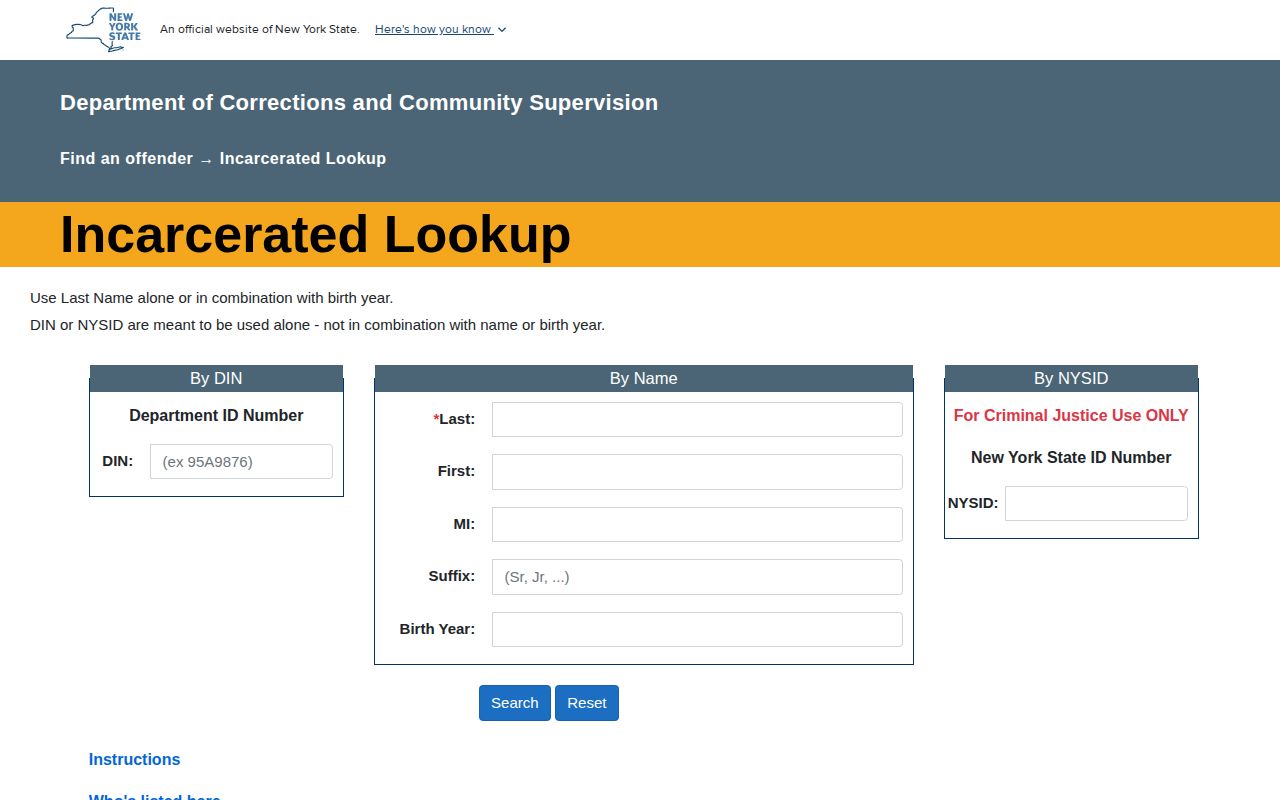
State reception comes first. Use the state system only after that step, never for today's Queens arrests. Commercial mugshot sites rank a distant second, since major indexes publish no Queens local page and Mugshots.com lists none either. Those listings run stale and skip outcomes.
Request a Queens Arrest Record
NYC OpenRecords is the portal for a specific DOC or NYPD record. Start with the basics. For DOC, that means a name and an approximate date. Add a NYSID or Book & Case Number. Include the facility if known. Name the exact item you want, since the booking sheet, custody record, release record, and photo each need a separate request. NYPD prefers an arrest number. A name works too, if paired with an arrest date, NYSID, precinct, and date range.
- Identify the agency that holds the record.
- Select DOC or NYPD in OpenRecords.
- Describe one existing record and date.
- Ask for report and photo as distinct items.
- Use the stated appeal route after a denial.
Mail a DOC request to its Records Access Officer, Legal Division, 75-20 Astoria Boulevard, Suite 305, East Elmhurst, NY 11370. Walk-in inspection runs weekdays, 9 a.m. to 4 p.m. Copies run 25 cents per page, or actual reproduction cost, and appeals are due within 30 days. Photos carry no same-day promise.
Note: FOIL reaches existing agency records; it does not require a custom Queens arrest list.
New York Booking Photo Law
Public Officers Law §87 sets the rules for city record access. It allows privacy, case, and safety exemptions. New York has enacted no blanket mugshot ban. Nor is there any broad anti-pay-to-remove system. A 2017 bill, S5029, died in committee and never became law.
Sealing is New York's main tool here. CPL §160.50 covers many cases that end in the accused person's favor. It reaches photos and fingerprints too. For some older convictions, CPL §160.59 permits an application after at least ten years. The limits are strict, though. A Certificate of Disposition supports the process. The court sealing instructions lay out the official path.
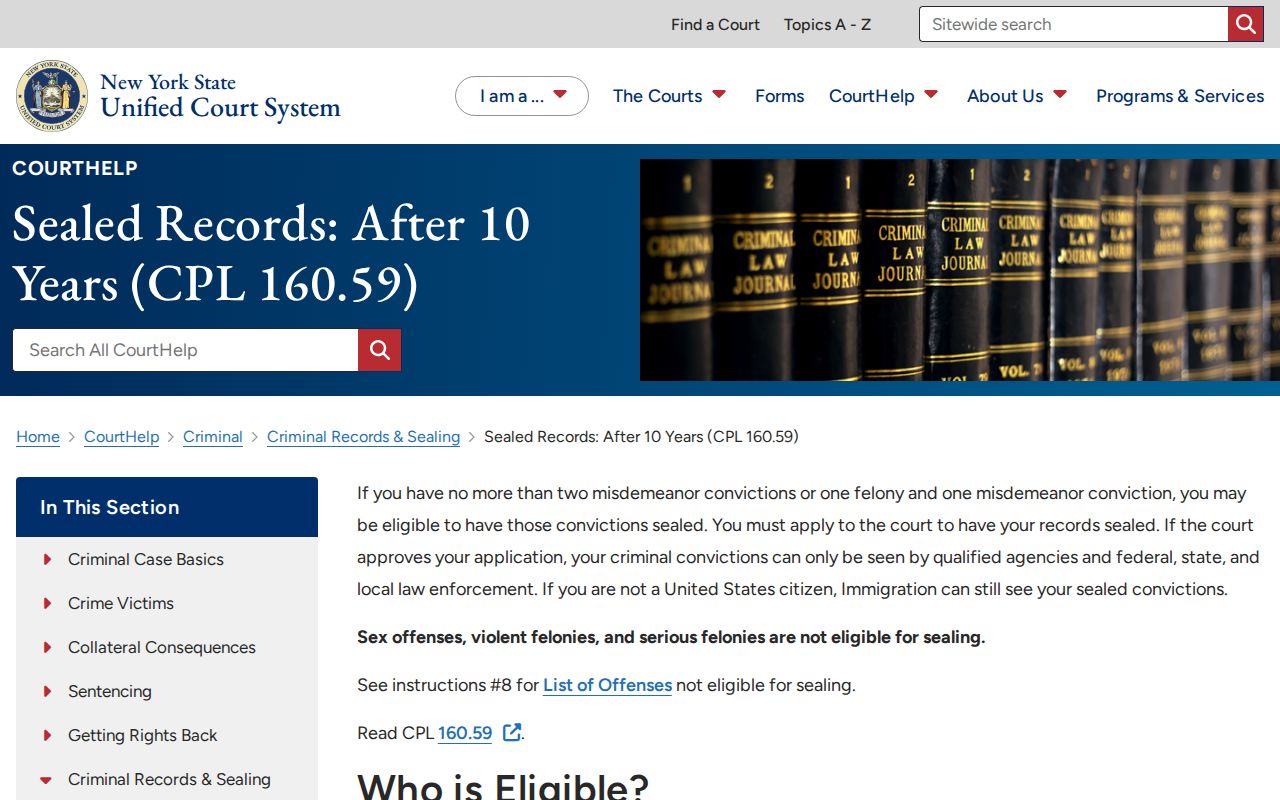
A seal or correction at the source comes before a stale-search request.
Older Queens Booking Records
A record missing online is not a record destroyed. DOC data reaches back to September 2005 in places, yet not every Queens arrest stays visible. Results can drop after release. Sealed records may be hidden too. The state's general local retention schedule leaves out New York City offices and boroughs, so it cannot be read as DOC's exact rule, a point the State Archives retention page puts in context. Recent arrests belong with OpenRecords; older city material may need Municipal Archives research. Visibility, retention, and public access are separate questions. Trace an older record through the agency first, then the correct archive.
Queens Arrest Warrants and Wanted Notices
NYPD offers no full public name search for every warrant. The NYC311 warrant route points Queens inquiries to Queens Criminal Court, 125-01 Queens Boulevard, Kew Gardens. That office takes calls at (718) 298-0792. A citywide line runs at (646) 386-4900, weekdays 9 a.m. to 5 p.m. Warrants never expire. Contact the court or a lawyer to plan a safe appearance. Never treat an unofficial hit as proof, and never approach a wanted person. NYPD Crime Stoppers posts selected wanted notices. It takes tips, but it is no permanent Queens list. A wanted image may be surveillance footage, not a mugshot. The official screen centers on court confirmation.
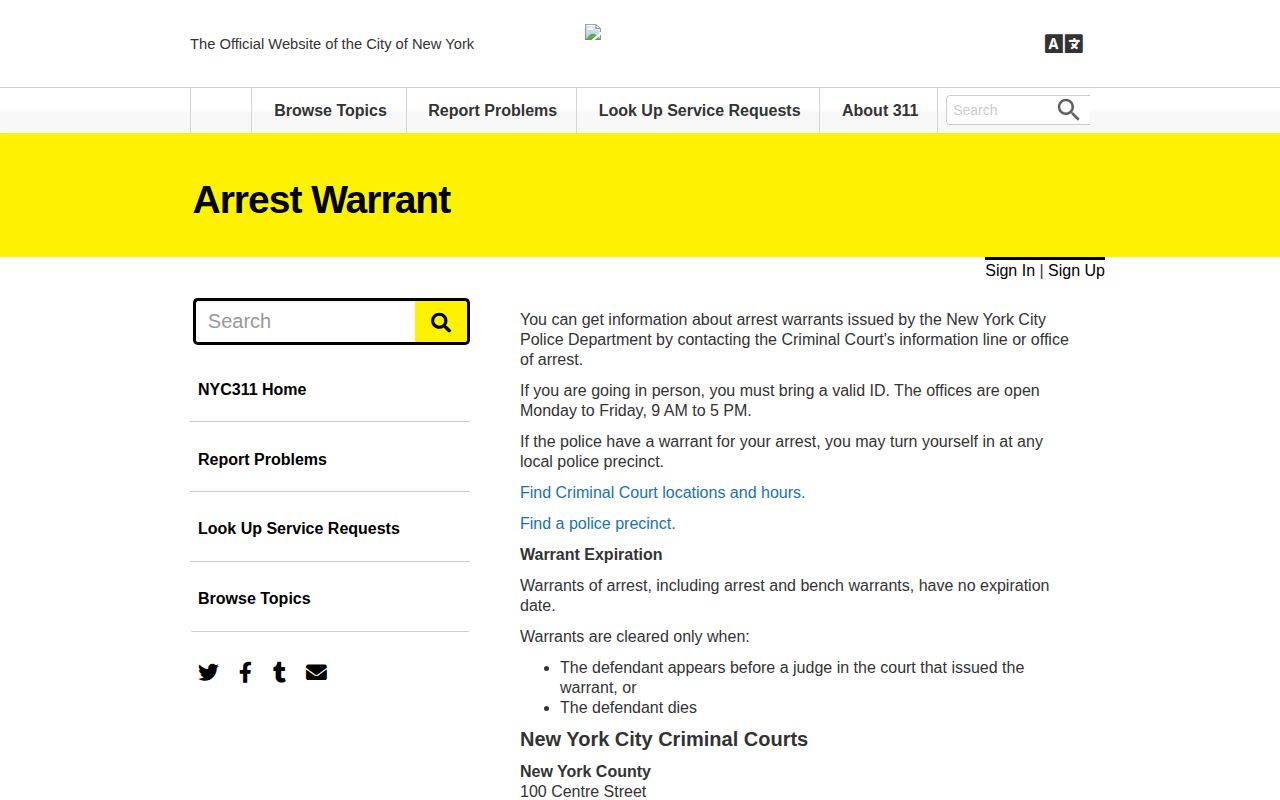
This is a routing source, not a name list or evasion tool.
After a Queens County Arrest
Queens Criminal Court handles arraignments and misdemeanors. Felonies can continue in Supreme Court. WebCriminal lists some future dates, though sealed, youthful-offender, finished, or brand-new cases may not appear. The official outcome paper is a Certificate of Disposition, generally $5 to $10, and NYC courts commonly charge $10. Charges may shrink or vanish as the case moves. Juvenile and youthful-offender matters stay confidential. Do not rebuild a missing record from social media; release ends custody, and the court case can stay open after it.
One Arrest Creates Several Records
One Queens County arrest can spawn several records. None of them tells the whole story. NYPD logs the police event. The court then tracks arraignment, later appearances, and the result. DOC adds a custody entry only if the person enters a city jail. VINE reads from that custody system to send alerts. A later state-prison sentence brings DOCCS into play, with its own DIN. Dates differ because each source marks its own step. That mismatch explains most apparent conflicts. An arrest date can precede a DOC admission date. The charge in a police dataset may not match what survives arraignment. A DOC release date marks a change in city custody. The court case stays open all the while. A VINE transfer alert may just reflect movement out of DOC. Compare identifiers and dates before deciding two entries describe the same stage. Keep the arrest number, NYSID, Book & Case Number, docket number, and DIN as they surface. Use them for a direct official search or focused request, not for broad publication. The best correction point is the record's owner. NYPD owns police paperwork, DOC owns custody data, the court owns the outcome, and DOCCS owns state-prison information.
Queens Jail Locations Can Change
Rikers Island is still the main Queens-located DOC complex. Still, an arrest in the borough guarantees nothing about housing. DOC also uses other city facilities and hospital prison wards. Transfers happen without any new arrest. The city is developing borough-based jails while reworking parts of Rikers. So the live DOC facility list and the person's current custody result beat any old article or hard-coded claim. Treat the jail mailing address with the same care. It helps route mail under current DOC rules, nothing more. It does not fix the place of arrest or a permanent housing unit. Check the record again before relying on it. When a facility changes, three facts remain distinct. The police arrest, the court case, and the custody move each stand on their own.
Custody Beyond Queens Records
A state sentence changes everything. Once a person is received by DOCCS, they get a DIN. That number pairs the reception year with a letter for the reception center and a four-digit sequence. Someone merely arrested in Queens County, awaiting trial, or serving a city sentence stays inside the NYC system instead. For those it does cover, DOCCS answers questions about custody status, facility, admission or commitment, sentence terms, and release. It will not, however, surface recent Queens County arrests across the board. Federal custody runs on a separate track. The federal BOP holds designated federal prisoners plus some former ones. Yet it does not hold every pretrial detainee kept for the U.S. Marshals Service. The Marshals rely on state, local, and contract beds, and they publish no ordinary name-search roster. Location, transport, and booking-photo details stay restricted. So a local DOC no-result tells you nothing about whether a federal agency holds someone. ICE runs its own detainee locator. Searches take a nine-digit A-number with country of birth. An exact name also works, but only with both birth country and birth date. Nobody under 18 appears. This covers immigration detention, not the Queens criminal courts, and there is no public booking-photo gallery. Trace any transfer in order. Start with city police and jail sources after a new arrest. Move to the courts for the case itself. Then go to DOCCS after state reception, and the right federal locator only once federal or immigration custody is clear. When the holding system is murky, lean on two leads. The court docket and the agency that last confirmed custody point you to the next move.