
How New York City Arrests Work
Queens County and the Borough of Queens share the same ground inside the consolidated City of New York. That structure shapes every record search. New York City is the only incorporated municipality governing Queens, so Jamaica, Flushing, Astoria, Long Island City, and Far Rockaway are neighborhoods, not separate jail jurisdictions. Jamaica holds the county seat. It runs no police department and no arrest roster of its own. The NYPD covers every Queens neighborhood through Queens North, Queens South, and 16 precincts.
An arrest usually starts with NYPD processing. From there the path forks. A person may get a desk appearance ticket and leave, or head to arraignment, where a judge releases them, sets bail, or remands them without it. City custody begins only at commitment. The NYC Sheriff, a civil-enforcement office under the Department of Finance, neither runs the jail nor holds the Queens arrest roster.
Where New York City Bookings Appear
Queens has no single official list showing same-day arrests with names and booking photos. Instead, a few separate agencies each answer one part of the question. Pick the channel that matches where the person is right now, and treat news reports as background only.
| Channel | What it covers | Photos? | Status |
|---|---|---|---|
| NYC DOC lookup | People entered into current or recent city jail custody | No public photo field | Official |
| NYPD Queens statistics | Weekly borough and precinct counts, not a name list | No | Official |
| NYC Open Data | Arrest and custody datasets for analysis | No name-and-photo roster | Official |
| NYPD newsroom | Selected incidents and arrest announcements | Agency or scene images may appear | Official, selective |
| Queens District Attorney | Selected arrests, indictments, and outcomes | Not a booking gallery | Official, selective |
| Queens Chronicle | Neighborhood police and court reporting | Editorial images may appear | Unofficial, selective |
Commercial arrest sites tend to be spotty, outdated, or wrong about how a case stands. No dependable Queens-focused feed exists on the major aggregators. A statewide page alone does not prove Queens arrests are covered. Before trusting any secondary report, go back to the source. Check NYPD, NYC DOC, or the court record itself.
Find a New York City Arrest
Begin with the date of the arrest. Note where the person likely sits in the process. That habit guards against one common error. A blank DOC result is not proof that no arrest happened. Each step along the Queens path queries a different agency's record.
- For police processing, check the relevant precinct, official NYPD news, or make a precise NYPD records request.
- After arraignment and continued detention, search NYC DOC by NYSID or Book & Case Number. A name search needs an added identifier.
- For release or transfer alerts, use the VINE Arrest Check after DOC custody is confirmed.
- Check WebCriminal for covered active court appearances. Ask the court clerk for a Certificate of Disposition when the final result matters.
- If the report or photo is not online, send a targeted FOIL request to the agency that keeps it.
Someone sentenced to state prison will show up in the New York State DOCCS lookup. The city roster will not carry that person. Other systems need their own sources. Think of the Federal Bureau of Prisons, ICE, and federal courts. Two labels trip people up. "In custody" does not mean the arrest happened today. "Released" does not mean the case was dismissed. Knowing these boundaries prevents dead-end searches. It also points you to the office that can actually answer.
Why New Custody May Be Missing
A fresh Queens arrest takes time to appear. The NYPD books the person first. The Department of Correction picks them up later. That handoff is where the gap lives. NYC311 cautions that someone arrested within the past 72 hours may still be in police custody rather than at a DOC facility. DOC's own VINE guidance goes further, saying 48 hours or more can pass before a person is housed by DOC and entered in its system. So a missing name does not mean a mistake. It usually means the paperwork is still moving through the sequence of processing, transport, arraignment, the detention decision, DOC admission, and finally database entry. Some paths end early. A desk appearance ticket or a release at arraignment can stop things before DOC admission ever happens. The NYC311 custody guidance helps when a very recent arrest has not appeared yet. Search again with the correct spelling and identifier, then check the court or request the police record itself.
Note: A blank result can reflect timing, release, spelling, sealing, or another custody system, not the absence of an arrest.
NYPD Queens Arrest Records
The NYPD holds the police arrest record. The Department of Correction holds what comes later, such as custody and admission material. For an NYPD record, submit through NYC OpenRecords and select the Police Department. Ask for a record that already exists. Agencies do not build lists on request. Give the full arrest number when you have it. Otherwise provide the person's name, date of arrest, NYSID, date of birth when appropriate, and precinct. Say whether you want the arrest report, the paperwork, or a specific photograph. The Records Access Officer works in the Legal Bureau FOIL Unit at One Police Plaza, Room 110-A, New York, NY 10038. The phone number is (646) 610-5296. Hours are weekdays, 8:30 a.m. to 4 p.m. NYPD notes that statutory copying fees apply and electronic records may be emailed when practical. Photo turnaround gets no fixed promise. For a DOC custody, admission, release, or booking record, select the Department of Correction in OpenRecords and mail its Records Access Officer at 75-20 Astoria Boulevard, Suite 305, East Elmhurst, NY 11370. DOC charges 25 cents a page. Either agency can redact or deny material under FOIL, privacy, sealing, safety, or active-investigation rules.
Queens Precincts and Court Records
Sixteen precincts cover Queens. The NYPD precinct directory gives each station's street address and public phone number. The 103rd, for example, patrols Jamaica, Hollis, Lakewood, and downtown Jamaica. Precinct pages are contact listings, not blotters. None of them posts a complete name-and-photo arrest roster.
Court records follow a separate track. Misdemeanors and lesser offenses belong to Queens Criminal Court at 125-01 Queens Boulevard in Kew Gardens. That court also handles arraignments and early felony proceedings. Felonies can then continue in Queens Supreme Court, Criminal Term. WebCriminal shows covered future appearances, though sealed, youthful-offender, finished, or not-yet-entered matters may be missing.
A Certificate of Disposition is the official paper stating how a case ended. Dismissal, plea, conviction, acquittal, or sentence can all appear there. That final record can differ sharply from the original booking charge. Release from DOC only means custody ended. Juvenile and youthful-offender records stay confidential. Rebuilding them from news posts or social media is never appropriate.
New York City Custody Locations
A Queens arrestee held after arraignment lands with NYC DOC. Housing could be Rikers Island, another city facility, or a hospital prison ward. Placements shift. A lookup result shows where the person sits right now, not where the arrest happened. Check the official facility list before planning a visit.
The NYC DOC facilities page stays authoritative while the borough-based jail plan reshapes the system. It lists the Rikers Island facilities plus prison wards at Bellevue and Elmhurst. State prison is a different story. Once sentenced there, a person moves to New York State DOCCS, a separate agency entirely.
A DOC record can list charges, court date and location, Book & Case Number, jail mailing address, NYSID, holding location, release date, and bail or bond. Bond is money securing release. Remand means detention without bail. No booking-photo field appears in the public DOC interface. NYPD and DOC may each hold a photo. Getting one through FOIL depends on the case.
Queens Arrest News and Context
News coverage can tie a Queens arrest to a neighborhood, a court filing, or a later prosecution. Queens Daily Eagle leans toward crime, courts, and policy. Queens Patch, QNS, NY1, and the Queens Chronicle also run selected public-safety stories. Timing is event-driven. No outlet replaces the police record, custody lookup, or court disposition. The Queens Chronicle site shows the kind of neighborhood reporting that sits outside official systems.
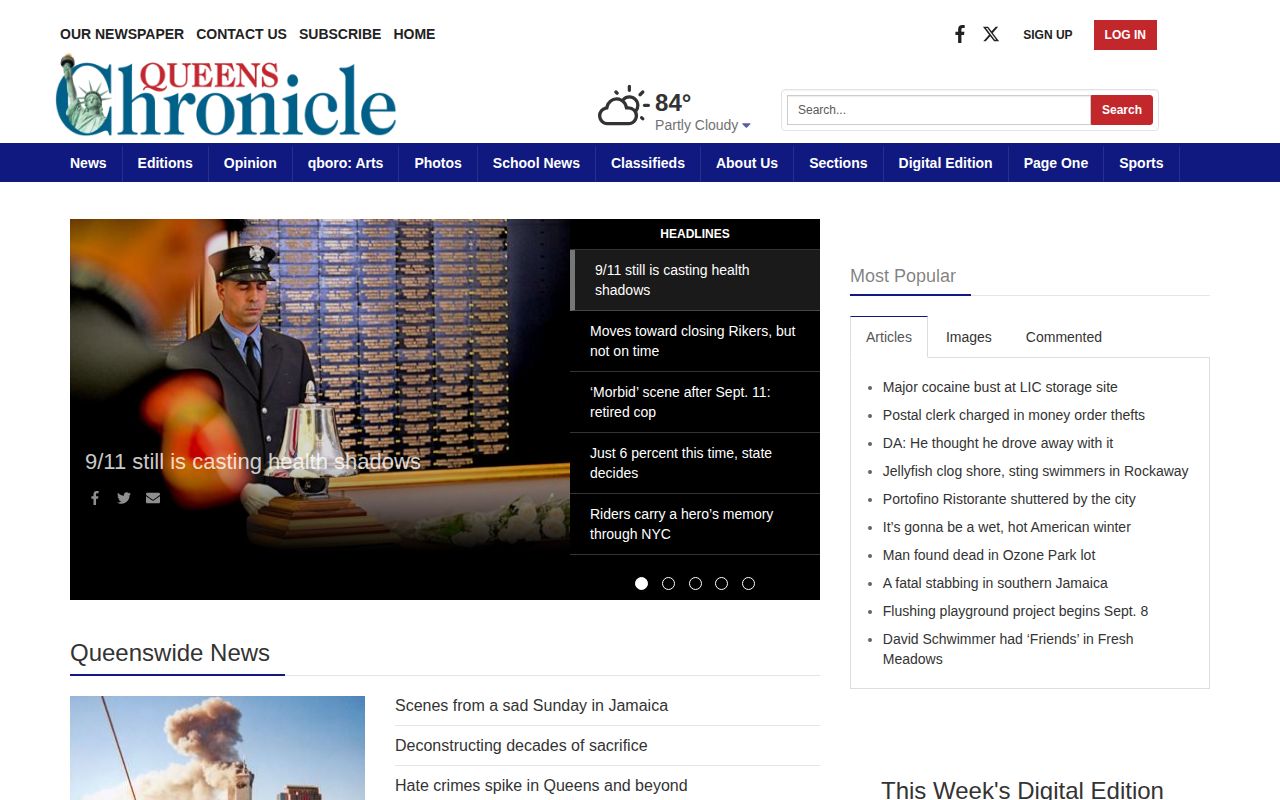
A news page is not a roster. Nor is it a gallery of Queens arrest photos. Check the byline, publication date, image caption, and named agency. A surveillance still, wanted flyer, or scene photo is not a booking photo. Official releases may omit later court developments. Use the court record for the outcome; a news story should guide the search, not end it.
Public Record Search
Sponsored Results